
The first question is what kind of water
Clean water from a supply line or a rain leak is very different from water that came from a drain, a toilet or a flood. Clean water gives you a chance to save the piece. Contaminated water usually means the mattress or sofa is lost.
If you are not sure of the source, treat it as contaminated until a professional says otherwise.
Why soft goods are hard to dry
A mattress is foam, fiber and springs wrapped in fabric. Water soaks deep into the core and stays there. The surface can feel dry while the middle is still wet.
A sofa has a wooden frame, foam cushions and fabric, with a lot of hidden space for moisture. The frame can dry, but the cushions are slow.
Decision guideKeep, dry or discard
| Item | Clean water, caught within a day | Contaminated water or sat for days |
|---|---|---|
| Memory foam mattress | Possible if dried quickly | Discard. |
| Innerspring mattress | Sometimes dried, odor can linger | Discard. |
| Upholstered sofa | Cushions may be saved, frame dried | Discard. |
| Leather or wood furniture | Often cleaned and dried | Clean or discard depending on the water. |
| Area rug | Clean and dry flat | Discard or professionally clean. |
How to dry a piece you want to keep
Get the item off wet carpet and into a ventilated space. Press out water with towels, and use a wet vacuum on the surface if you have one.
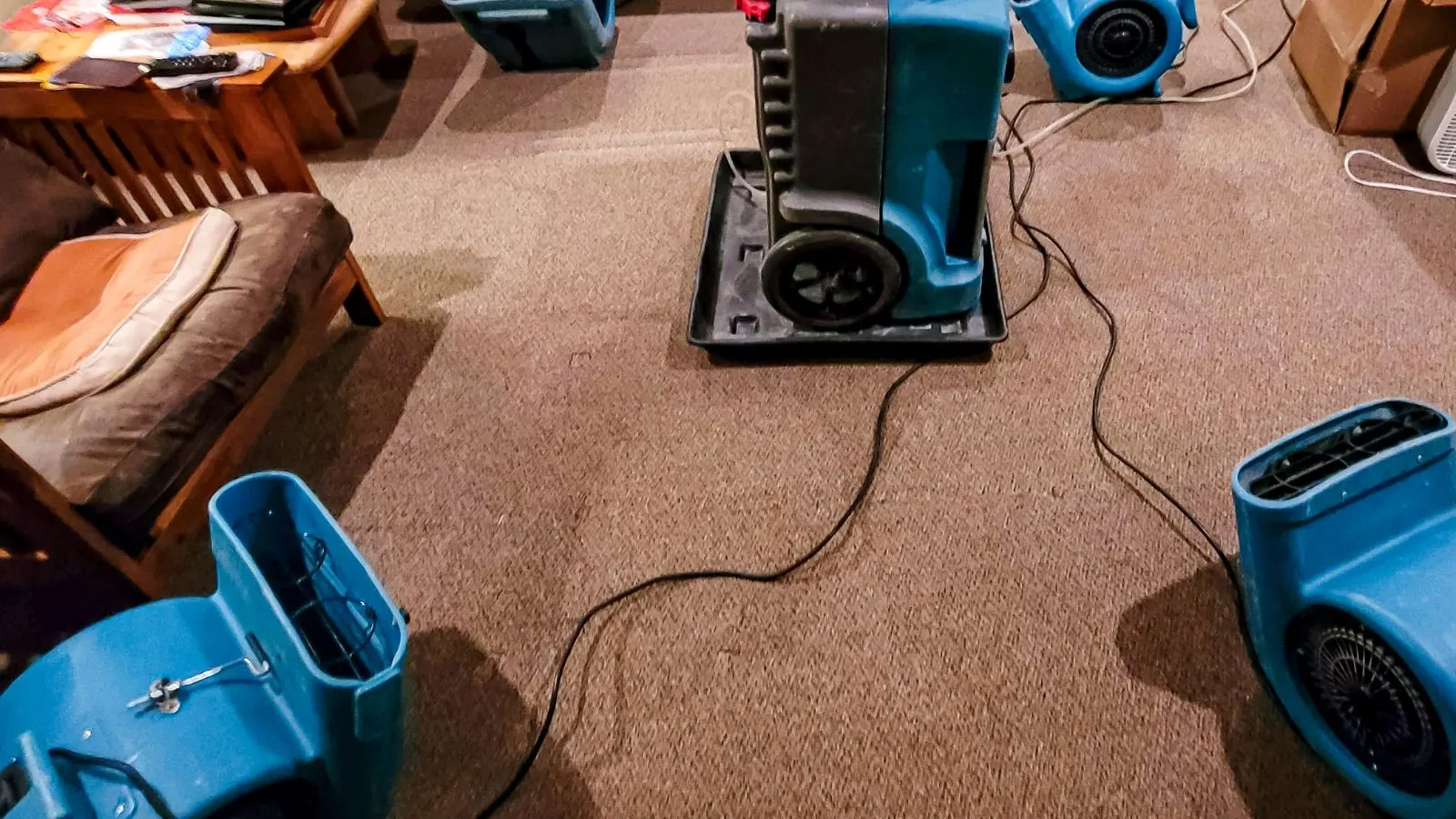
Run fans and a dehumidifier. Turn the piece so air reaches all sides. Keep it away from direct heat, since heat can warp frames and cook odors into foam.
- Elevate the piece off the floor.
- Stand mattresses on edge.
- Remove cushion covers if they zip.
- Check the underside for dampness.
Furniture soaked?
Call. Fast extraction gives soft goods the best chance.
Sun and airflow help
On a dry day, sunlight and moving air dry fabric well. Take the piece outdoors if you can, and flip it every few hours.
If it still smells musty after a few days, moisture is still inside. Mold can start on damp material in 24 to 48 hours, so do not delay.
When to discard
Throw away anything that touched sewage, any piece that still smells after drying and anything with visible growth. Mold in foam cannot be cleaned out.
Photograph the item first and write down its age and cost for your insurance.
Insurance and contents
Homeowners policies often cover contents damaged by a covered sudden water loss, usually at a depreciated value unless you have replacement cost coverage.
Keep the list and photos, and do not discard anything the adjuster has asked to see.
Mattress covers and protectors
A waterproof mattress protector may keep a spill from reaching the core, so wipe and air it and check beneath. If the protector held, you may only need to dry the cover and the edges.
Check the seams and the underside, since water can slip around the edges.
Upholstery cleaning
Once a sofa is dry, a professional upholstery cleaner can remove stains and odors from the fabric. Cleaning a damp sofa only adds more water.
Ask the cleaner to confirm that the cushions are dry inside before they begin.
Children's items and bedding
Bedding, pillows and plush toys that were in clean water can often be washed on a hot cycle and dried fully. Items that touched contaminated water should be thrown away.
Keep a short list of what you discard for your records.
Pillows, cushions and rugs
Foam cushions that were in clean water can sometimes be squeezed, stood on edge and dried with fans. Rugs should be unrolled so air reaches both sides.
If a smell remains after drying, replace the item.
Preventing a repeat
Move furniture away from walls with known leaks. Keep valuables off basement floors. A small water sensor near the water heater or washer can warn you early.
Fix the cause before you bring replacement furniture back.
SourcesWhere the 24 to 48 hour advice comes from
The drying window follows EPA guidelines on moisture and mold, and water categories follow the S500 standard.
More detailWhat can and cannot be saved
Hard surfaces and solid wood frames can often be dried and cleaned. Foam and stuffing that soaked up contaminated water are usually thrown away, because they cannot be dried fully inside.
Clean water from a supply line is different from water that came through a sewer line or from outside. The source decides whether an item is worth saving.
More detailNext steps after you move it
Lift the item off the floor and check the carpet and pad under it, since the floor often holds more water than the furniture does. A damp pad can feed odor and mold if it is left in place. See carpet water damage restoration if the floor was wet too.
More detailDrying what can be dried
Stand the item on edge in a dry, ventilated room and run a dehumidifier near it. Fans help, but warm air alone does not pull water from foam. Blot, do not rub, and avoid heaters that can scorch fabric.
If it still smells damp after a couple of days, the inside is probably still wet. At that point replacement is often the better choice.
Disposing of furniture in Haverford Township
Haverford Township's Public Works handles collection services, and bulk item rules can change, so check the township website or call before setting a mattress at the curb. Large pieces often need to be scheduled.
The EPA advises that most wet materials should be dried within 24 to 48 hours, and that porous items that cannot be dried should be discarded. Keep that window in mind when you decide how long to try.
Protecting the room itself
Furniture sits on floors, and water that soaked the sofa also reached the carpet and the baseboard. Have the room checked with a moisture meter.
Our crews handle carpet restoration and water extraction, and they log readings. We serve Ardmore and Wynnewood apartments and houses.
Common questionsWet furniture questions
How do I get a bulky mattress out of a Haverford Township home for disposal?
Check with the township about bulk pickup rules, and wrap the mattress in plastic if you can. Some retailers also remove old mattresses with a delivery.
Can a wet mattress be dried with a hair dryer?
No. It dries the surface only, and heat can damage foam. Use airflow and dehumidification.
Is a musty smell the end of the mattress?
Often yes. If drying does not remove the odor, mold may be inside.