
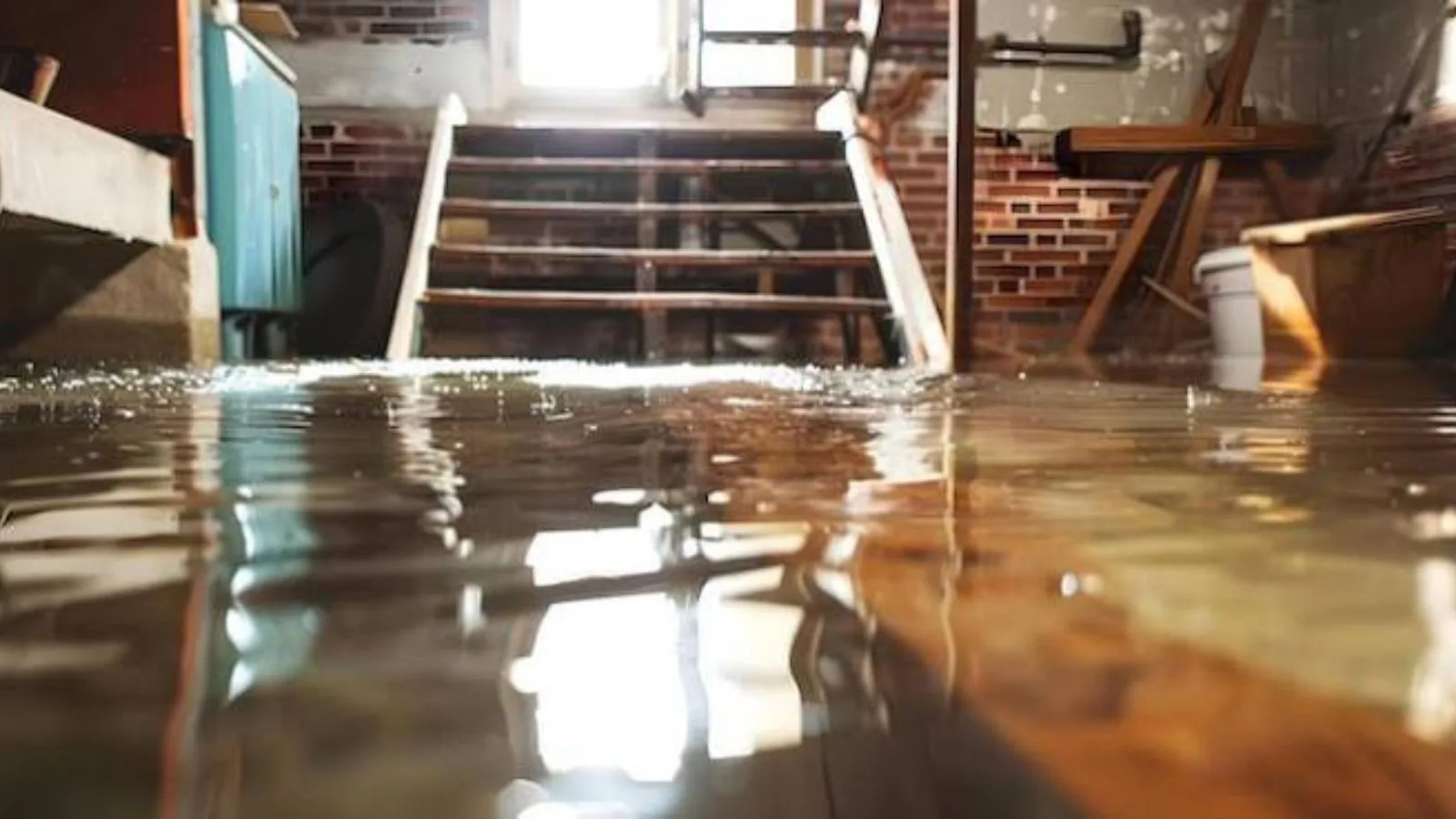
Flood water is spreading, so act now
Flood water moves into drywall, subfloor and insulation within hours, and every hour of delay widens the area that has to come out. Our dispatch line is open 24/7, so call while you are still on the property and describe what you see.
While you wait, stay out of any room where water touches outlets, cords or the electrical panel. Cut power at the breaker only if you can reach it without standing in water, and call the utility or 911 if the panel itself is wet.
- Move photos, papers and electronics to a dry upper floor if it is safe to carry them.
- Lift rugs and pull furniture off wet carpet, but do not lift heavy items alone.
- Take dated photos of the waterline before anything is moved.
Signs a flood has gone past a simple cleanup
A mop and a wet vacuum handle a spill. A flood is different, because water wicks upward and sideways through materials that look dry.
Water above the baseboard
Standing water that reached the baseboard has usually soaked the bottom of the drywall and the wall cavity behind it.
Musty smell within a day
A damp odor that appears in 24 hours points to wet insulation or subfloor you cannot see.
Soft or cupped flooring
Floors that feel spongy, lift at the seams or cup along the boards have absorbed water from below.
Water came from outside
Water from a yard, creek or storm drain can carry silt and bacteria, which changes what can be saved.
How we handle a flood job from the first call
Flood work follows a fixed order so that nothing gets dried over something still wet. The sequence below is how most Haverford jobs run.
Phone triage
The dispatcher asks where the water entered, how deep it is and whether power is on, then tells you what to do while the crew drives over.
Extraction
Pumps and wet vacuums pull standing water first, because removing liquid is faster than drying it out of materials.
Moisture mapping
Meters and a thermal camera find wet drywall, subfloor and framing, and the readings set the drying plan.
Structural drying
Air movers and dehumidifiers run until readings reach the dry standard for each material, and we log them each visit.
Clean water, gray water or black water
The source of the water decides how much of the building can be kept. Industry guidance such as the S500 standard sorts water into categories, and the category drives the plan.
| Water type | Typical source in a home | Usual handling |
|---|---|---|
| Clean | Supply line, broken pipe, tub overflow | Extract and dry, most materials can stay. |
| Gray | Washing machine, dishwasher, sump overflow | Extract, clean and dry, porous materials often removed. |
| Black | Sewage, creek or yard flooding | Remove porous materials, disinfect, dry. |
Water that came across a yard or up from a drain is treated as contaminated from the start. Clean water that sits for a day or two can slide into the gray category, which is one more reason to call early.
Water still rising?
Call now and tell the dispatcher what you can see. If the panel or outlets are wet, stay out of the room.
What affects the cost of flood cleanup
We do not quote flood work before we see it, because the same inches of water can mean very different jobs. These factors move the total most.
Depth and area
A thin film across one room is a smaller job than six inches across a finished basement.
Water category
Contaminated water adds removal, cleaning and disposal steps that clean water does not need.
Materials affected
Carpet pad, drywall and insulation come out more often than hardwood or tile, and each adds labor.
Drying time
Equipment days depend on humidity, house size and how deep the moisture went.
Access and hours
Stairs, tight crawl spaces and overnight calls change crew time.
We explain scope and price before work starts, so you see the number before the pumps run.
Insurance basicsFlood damage and your insurance policy
Standard homeowners policies often cover sudden and accidental water from a burst pipe or a failed appliance, but they generally exclude flood from rising surface water or creek overflow. Flood coverage is usually a separate policy.
Read your policy or call your agent to see which cause applies to your loss. We document the damage with photos and moisture logs that you can hand to your adjuster.
Local conditionsFlooding around Haverford Township
Cobbs Creek and Darby Creek form part of the township boundary, and Naylors Run and Meadowbrook Run cross it. Delaware County was included in the federal disaster declaration for the remnants of Ida in 2021, and low spots near these streams are where many homeowners first see water.
Older sections such as Llanerch and Brookline were laid out in the early 1900s, so many basements here have stone or block walls that let moisture through. If your flood started in a basement, our basement cleanup page covers what happens below grade.
Next stepsRelated services after a flood
Most floods need more than one step. Standing water comes out through water extraction, and the remaining moisture is handled by structural drying and dehumidification.
If the water came from a drain, read about sewage backup cleanup before you touch anything. Mold can start in 24 to 48 hours on damp material, so ask about mold remediation if drying was delayed. We also serve Ardmore and Wynnewood.
Before the crew arrivesWhat not to do in flood water
Water categories follow the S500 standard, and contaminated water changes the plan.
Avoid these mistakes.
- Do not wade through water near electrical gear.
- Do not use household vacuums on water.
- Do not mix cleaners.
Flood cleanup questions
Do you handle flood emergencies at night or on weekends in Haverford?
Yes. The dispatch line is open 24/7, and a night or weekend call gets the same triage as a weekday call. Tell the dispatcher what you see and what you have already done.
Should I turn off the power during a flood?
Only if you can reach the breaker without standing in water. If the panel is wet or you are unsure, stay out and call the utility or 911 first.
How long does flood drying take?
Most structures need several days of equipment, but the real answer comes from daily moisture readings. We stop when the materials reach the dry standard.
Will my carpet and drywall have to be replaced?
It depends on the water type and how long it sat. Clean water caught early often leaves more salvageable, and contaminated water usually means porous materials are removed.