
Why kitchen leaks do so much damage
A kitchen has more water lines than any other room. The sink, dishwasher, ice maker and filter all run behind cabinets, so a slow drip can go unseen for weeks.
Cabinet bases made of particleboard swell when they get wet, and floors under them stay wet because air cannot reach them.
What to look forSigns of a hidden kitchen leak
Swollen cabinet bottoms
Particleboard expands and may peel.
Soft or lifting flooring
Water is wicking under vinyl or laminate.
Musty smell under the sink
Damp wood or a seeping connection.
Stain on the ceiling below
Water has traveled through the floor.
How we dry a kitchen
Stop the water
We close the valve and check the connections.
Pull toe kicks and extract
Removing toe kicks opens the space under cabinets.
Dry under and behind
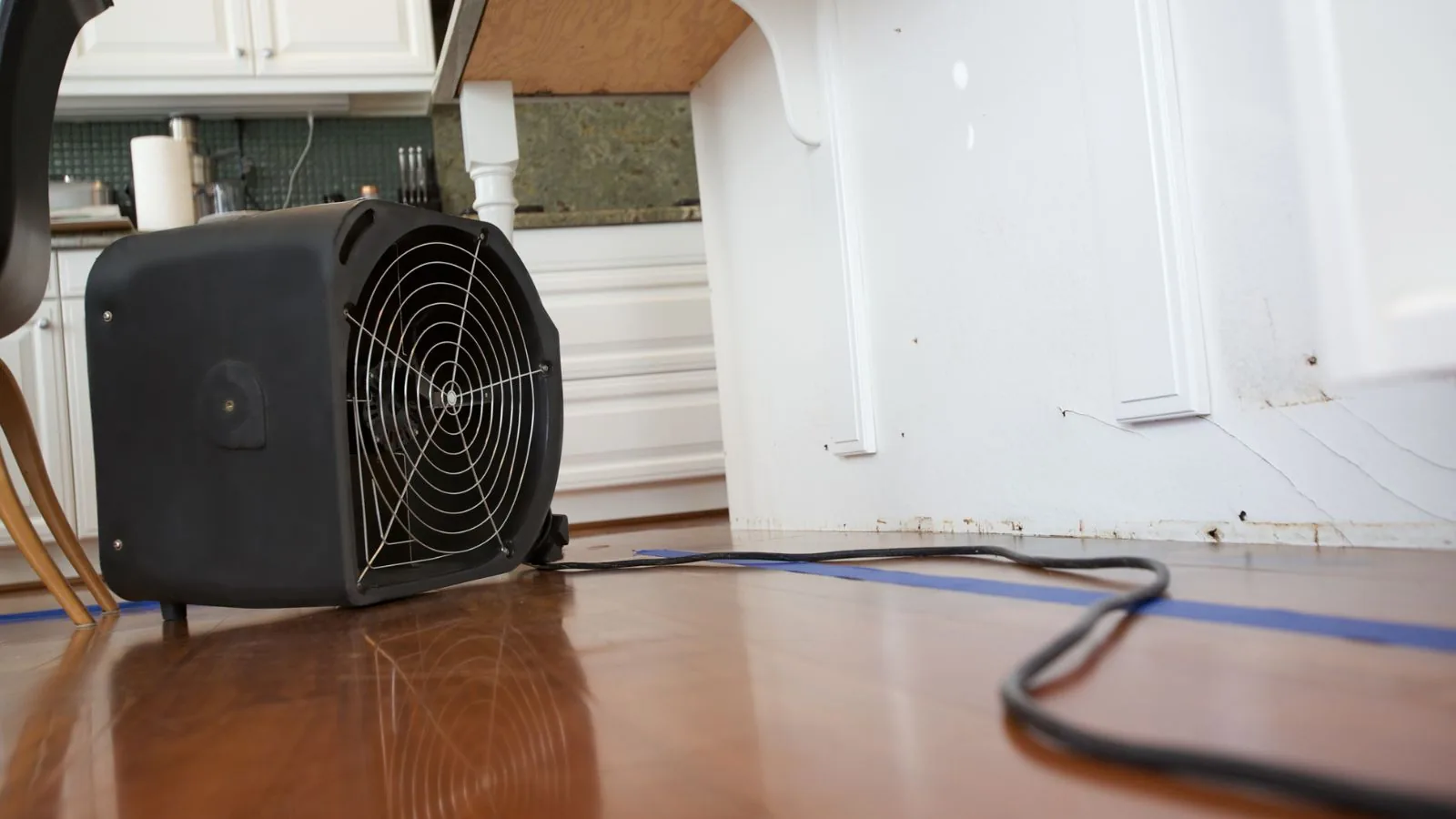
Air movers and a mat system push air under cabinets.
Decide what stays
Moisture readings show which cabinets and flooring recover.
Keep, dry or replace
| Material | If caught quickly | If saturated |
|---|---|---|
| Solid wood cabinets | Usually dried in place | May need refinishing. |
| Particleboard cabinet bases | Sometimes dried | Usually replaced. |
| Vinyl flooring | May need lifting to dry | Replaced if buckled. |
| Tile | Clean and dry subfloor | Check the grout and underlayment. |
Water under the sink?
Close the valve and call. Cabinet bases soak fast.
What affects kitchen restoration costs
Cabinet material
Solid wood and particleboard differ.
Flooring
Tile, vinyl and wood respond differently.
Duration of the leak
Slow leaks reach further.
Layout
Islands and built-ins limit access.
Rebuild scope
Cabinet and flooring replacement are separate.
We explain scope and price before work starts.
Insurance basicsKitchen leaks and insurance
Sudden failures of a sink supply or appliance line are often covered, while long-term seepage or neglected maintenance may not be. Matching of replaced materials varies by policy.
Photograph the cabinet interiors and the leak source before drying, and keep the failed part.
Local conditionsKitchens in Haverford homes
Haverford houses range from early twentieth century brick and stone homes to postwar capes and ranches, and many kitchens have been remodeled more than once. Layers of old and new flooring can trap water between them.
For other sources see appliance leak cleanup and hardwood floor repair. If dampness lingers, read structural drying. We also serve Ardmore.
First stepsWhat to do in the first hour
Close the shutoff valve under the sink or behind the appliance, and turn off the dishwasher. Empty the base cabinets so water does not sit in contact with stored items.
Photograph the cabinets, the floor and the source. Mop standing water, then open cabinet doors to let air in.
Common sourcesDishwashers and ice makers
These two cause many kitchen losses. A leaking door seal or a cracked inlet valve drips onto the floor each cycle, and an ice maker line can drip behind the fridge for months.
Pull the unit out and check the floor underneath when you notice a stale smell or a soft floor.
After dryingDeciding on repairs after drying
Once the kitchen is dry, you decide on cabinets, flooring and countertops. Ask your contractor to check that moisture readings are normal before new materials go in.
Ask your carrier how it handles matching if only part of a run of cabinets must be replaced.
Surfaces and fixturesCountertops, backsplashes and appliances
Stone and laminate countertops usually survive a leak, but the particleboard under laminate can swell along seams. A backsplash that has pulled away from the wall is a sign that water got behind it.
Built-in appliances may need to be pulled out so the floor under them can be dried. Ask a qualified installer to disconnect and reset gas or electric units.
Before the crew arrivesWhat to do in a leaking kitchen
Cabinet and floor drying follows S500 guidance.
Quick steps help.
- Close the valve under the sink.
- Empty the base cabinets.
- Photograph the source and the cabinets.
Kitchen water damage questions
Can wet cabinets be saved?
Solid wood often can. Swollen particleboard usually cannot.
Do I need to remove the floor?
Sometimes. Layered floors can trap water and may need to be opened.
How do I find a slow leak?
Check under the sink with a flashlight and dry paper towel, and look at the dishwasher and ice maker lines.
Is the dishwasher safe to run?
Not until the leak is fixed.