
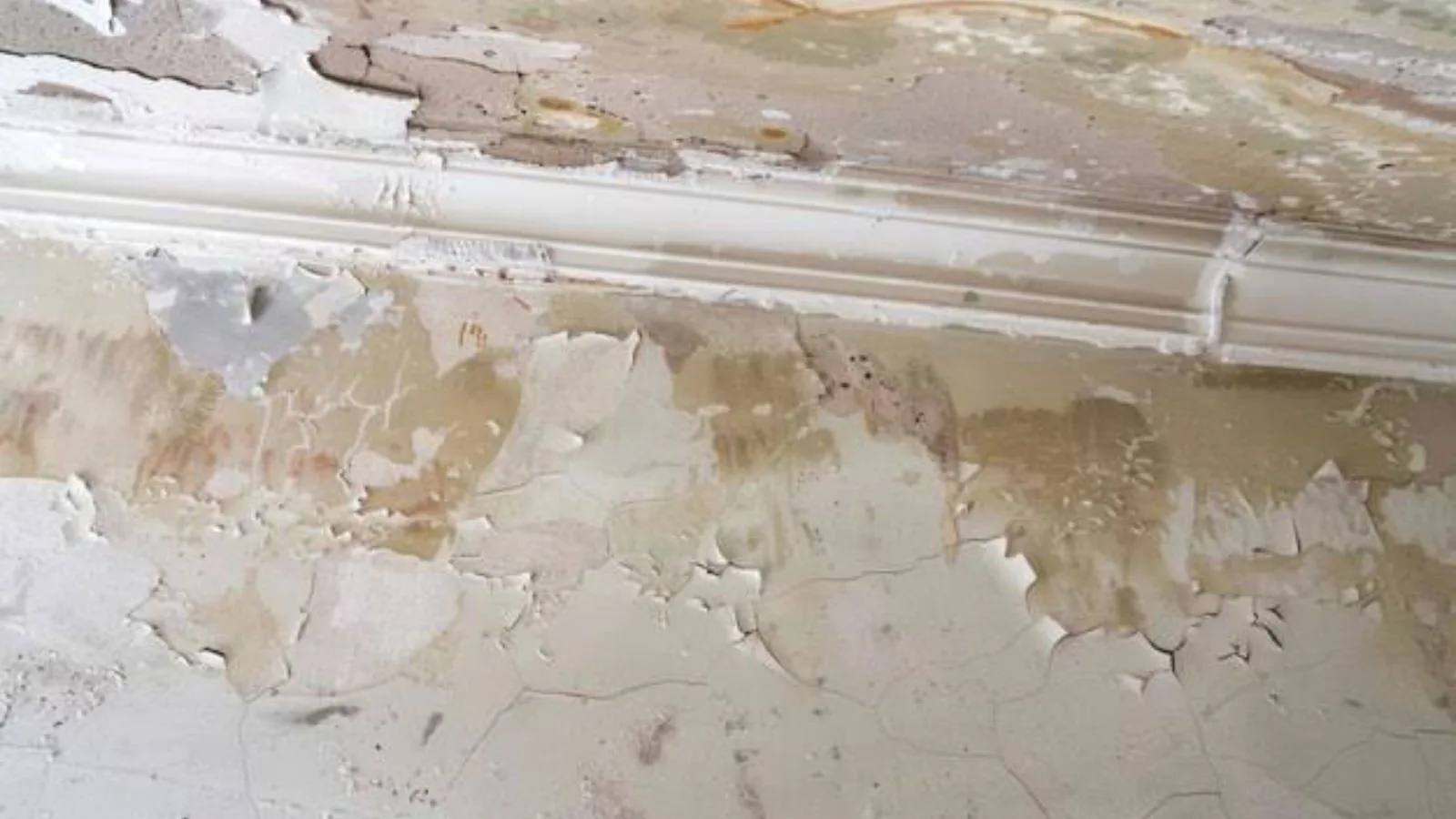
Why drywall and plaster fail when wet
Drywall is gypsum between paper faces, and both soak up water. Saturated board softens and loses strength, and the paper can feed mold if it stays damp.
Plaster on lath handles moisture differently. It can stay hard on the surface while the lath behind it stays wet, and it can crack or let go in sheets.
What to look forSigns a wall is wet inside
Bubbling or peeling paint
Moisture is pushing against the paint film.
Soft spot when pressed
The gypsum has lost its strength.
Stains that return
The source has not been fixed or the wall has not dried.
Cold or damp touch
Evaporation is cooling the surface.
How we handle a wet wall
Find the source
We trace the water to a pipe, roof, window or appliance.
Map the wet area
Meters and imaging show how far it spread.
Open the wall
We cut a flood cut above the wet line and remove damaged board and insulation.
Dry the cavity
Equipment dries studs and plates before the wall is closed.
Leave, dry or cut out
| Condition | Usual action | Reason |
|---|---|---|
| Dry to the meter, surface stain only | Seal, prime and paint | Board retained strength. |
| Damp but firm | Dry in place with airflow | Drywall can recover when caught early. |
| Soft, swollen or crumbling | Cut out and replace | Board will not regain strength. |
| Wet insulation inside | Remove insulation | It holds water against framing. |
Wall wet or bubbling?
Call. A damp wall can be wetter inside than it looks.
What affects wall repair costs
Wet height and length
Larger areas mean more cutting and drying.
Wall construction
Drywall, plaster and paneling differ.
Insulation
Wet insulation adds removal.
Finish work
Patching, texture and paint are separate trades.
Drying time
Studs and plates dry slowly.
We explain scope and price before work starts.
Insurance basicsInsurance and wall damage
Water damage to walls from a sudden pipe or appliance failure is often covered, while slow seepage and wear are commonly excluded. The cause of the wetting matters more than the stain.
Photograph the wall before cutting, and keep a piece of damaged board for your adjuster.
Local conditionsWalls in Haverford Township houses
Houses in Llanerch, Brookline and Beechwood date from the early 1900s, and walls in older sections are often plaster over lath, while postwar and later work uses drywall. Mixed construction in one house is common after additions.
Plaster repairs need a plasterer or skilled finisher. Related pages are ceiling repair, burst pipe damage and mold remediation. We serve Ardmore and its older homes too.
Flood cutsWhy we cut above the wet line
Water wicks upward in drywall, so the damp area is higher than the visible stain. We cut above the wet line to reach clean, dry board and to expose the cavity.
A clean straight cut makes the patch easier and leaves a good edge for finishing.
Inside the wallWall cavities and insulation
Insulation inside a wall holds water and keeps framing wet. Batt insulation usually comes out, while some closed-cell foam can stay.
We dry the studs and bottom plate until readings are normal before anything is closed up.
RepairFinishing after drying
Patching, taping, texture and paint are the drywall finisher's work. Plaster repairs call for a plasterer.
Give the repair time to cure before painting, and ask your finisher to prime with a stain blocker if old marks remain.
FinishesPaneling, wallpaper and trim
Wood paneling and wallpaper trap moisture behind them, so a dry-looking wall can be wet. We pull a corner or remove trim to check.
Trim and baseboards are often saved when removed carefully, which keeps repair costs down.
Before the crew arrivesWhat to do about a wet wall
Wall drying follows S500 guidance on moisture and materials.
Before the crew arrives, protect yourself and the room.
- Do not poke into a wall near outlets.
- Turn off power to a wet outlet circuit if safe.
- Photograph the stain and mark its edge with a pencil.
Wall water damage questions
Can I paint over a water stain?
Not until the wall is dry, and stain-blocking primer only helps after drying.
How high do you cut?
Above the wet line, usually a foot or two higher, then we check the cavity.
Does plaster need to be replaced?
Not always. Firm plaster can dry in place, while crumbling or detached plaster is removed.
Will the paint match?
Matching is a painter's work. We prepare the wall.