
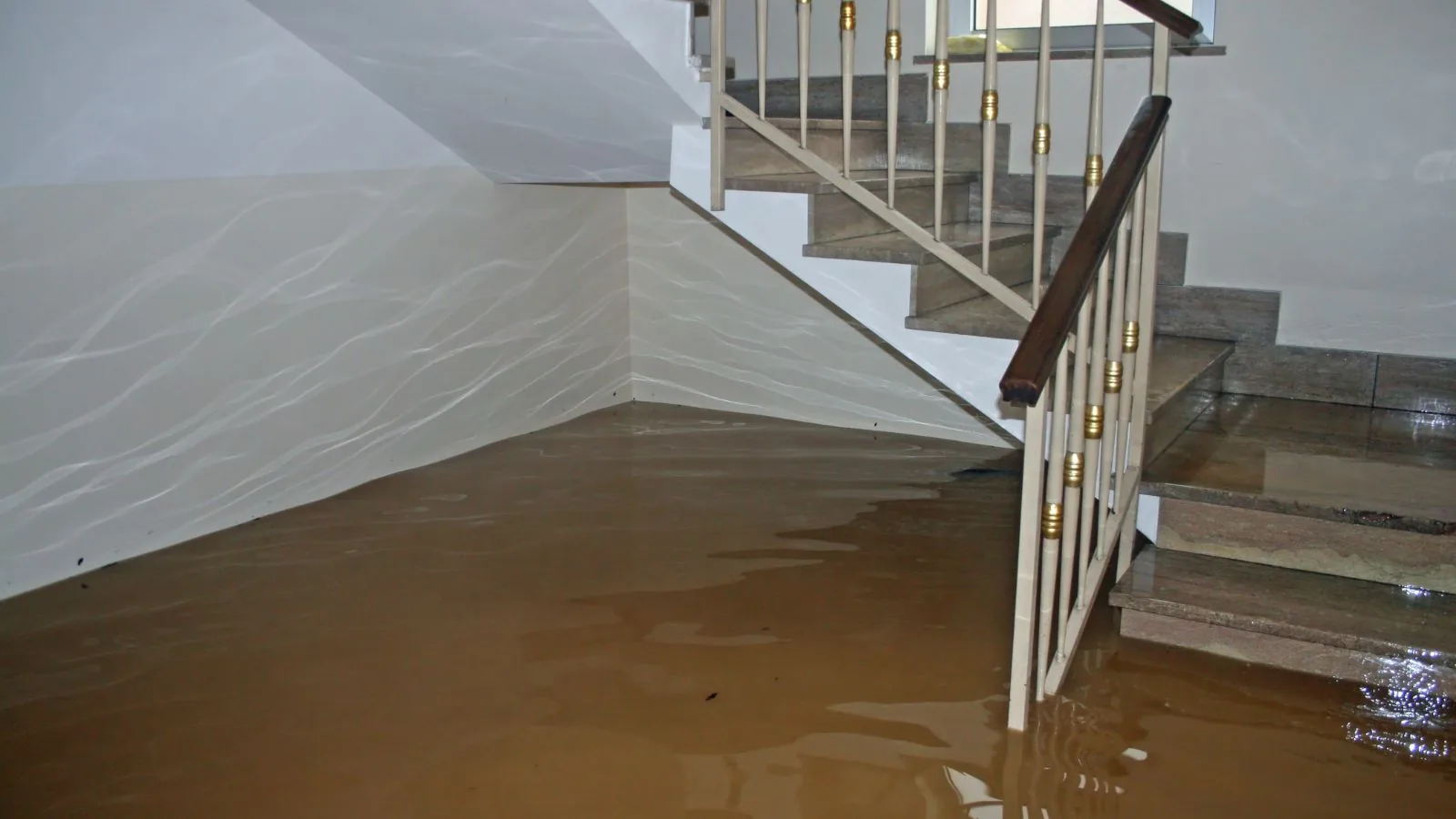
Water in the basement needs a fast start
A basement holds water against framing, stored belongings and often the furnace and electrical panel. Our line is open 24/7, so call as soon as you see water and tell the dispatcher how deep it is.
Do not go down the stairs if water is above the outlets or near the panel. If you can switch off the main from a dry spot, do so, and otherwise call the electric utility or 911 before anyone enters the water.
Why basements flood in the first place
Basement water comes from only a handful of sources. Heavy rain raises the water table and pushes it through cracks and the floor joint. Sump pumps fail during the storms they were installed for, and clogged downspouts dump roof water along the foundation.
Drain backups bring contaminated water up a floor drain, which changes the whole job. Knowing which one you have decides whether it is a cleanup, a repair or both.
What to look forSigns the problem is more than a puddle
White powder on walls
Efflorescence shows that moisture is moving through masonry.
Water along the wall-floor joint
Pressure from outside is pushing water through the seam.
Rust at the base of furnace or water heater
Repeated wetting has reached equipment.
Musty smell after rain
Damp materials are holding moisture that has not dried.
How a basement job runs
Control the source
We check the sump, downspouts and drains to see where the water is coming from.
Pump and extract
Standing water goes out through a pump line, then we extract what is left in carpet.
Sort contents
We separate what can be dried from what has to go, such as wet carpet pad and cardboard.
Dry and monitor
Dehumidifiers and air movers run while we read moisture daily.
Water in the basement now?
Call and keep clear of the stairs if the panel is down there.
Finished or unfinished basement
| Basement type | What usually comes out | What usually stays |
|---|---|---|
| Unfinished with a concrete floor | Stored boxes, wet cardboard | Slab and block walls once dried. |
| Finished with carpet | Carpet pad, lower drywall, baseboard | Carpet if clean water and caught early. |
| Finished with laminate or paneling | Swollen flooring, wet paneling | Studs and slab after drying. |
Wet drywall wicks water upward, so we often cut a line a foot or two above the waterline and check the cavity.
Cost factorsWhat affects basement cleanup costs
Depth and footprint
Deeper water over a larger floor takes longer to pump and dry.
Finished materials
Drywall, carpet and paneling add removal and disposal.
Contamination
Drain or creek water means more protective steps.
Contents
Heavy storage or a furnace room adds sorting time.
Drying duration
Humidity and wall construction set the equipment days.
We explain scope and price before work starts.
Insurance basicsBasement water and your policy
Homeowners policies often cover sudden water from a broken pipe, but seepage through foundations and surface flooding are commonly excluded. Sewer or drain backup frequently needs an endorsement, and it is worth checking if you have one.
The Pennsylvania Insurance Department takes consumer questions on 877-881-6388, and your agent can explain which coverage applies to your loss.
Local conditionsBasements in Haverford Township
Neighborhoods such as Llanerch, Brookline and Beechwood date from the late 1890s and early 1900s, and many houses there have masonry foundation walls that let moisture through over time. Houses near Naylors Run and Meadowbrook Run see more water after storms, as do homes along the Darby Creek and Cobbs Creek edges.
The township has two sewer areas, Cobbs Creek and Darby Creek, so a drain backup can be a municipal sewer issue as well as a house issue. For a flood from outside, see flood damage restoration. If the basement smells earthy after drying, mold remediation is the next page to read, and we also serve Ardmore.
ContentsMoving belongings out of a wet basement
Sort belongings as you carry them out. Cardboard, books and upholstered furniture that sat in water are usually lost, while plastic bins, metal tools and solid wood can often be cleaned and dried.
Keep a list of what you discard and photograph it first. Your insurer may ask for it, and the list is easier to write while the items are in front of you.
Before the crew arrivesWhat to do before pumping starts
Our extraction and drying steps follow the S500 standard as a procedural reference.
Safety comes first in a wet basement, so check these items before anyone goes down.
- Stay out if water reaches outlets or the panel.
- Shut the main water valve if a pipe is the source.
- Do not run a household vacuum on standing water.
Basement water questions
Do you handle basement water emergencies at night or on weekends in Haverford?
Yes. Dispatch is open 24/7, and basement calls at night are common after storms.
Is it safe to go downstairs to check?
Not if water is near outlets, cords or the panel. Wait for the utility or a crew before entering standing water.
Will my sump pump fix the problem?
A working pump handles seepage but not a major flood. If it failed, it needs repair or replacement, which is a plumber's job.
How soon will mold start?
Mold can begin on damp material within 24 to 48 hours, which is why fast drying matters.