
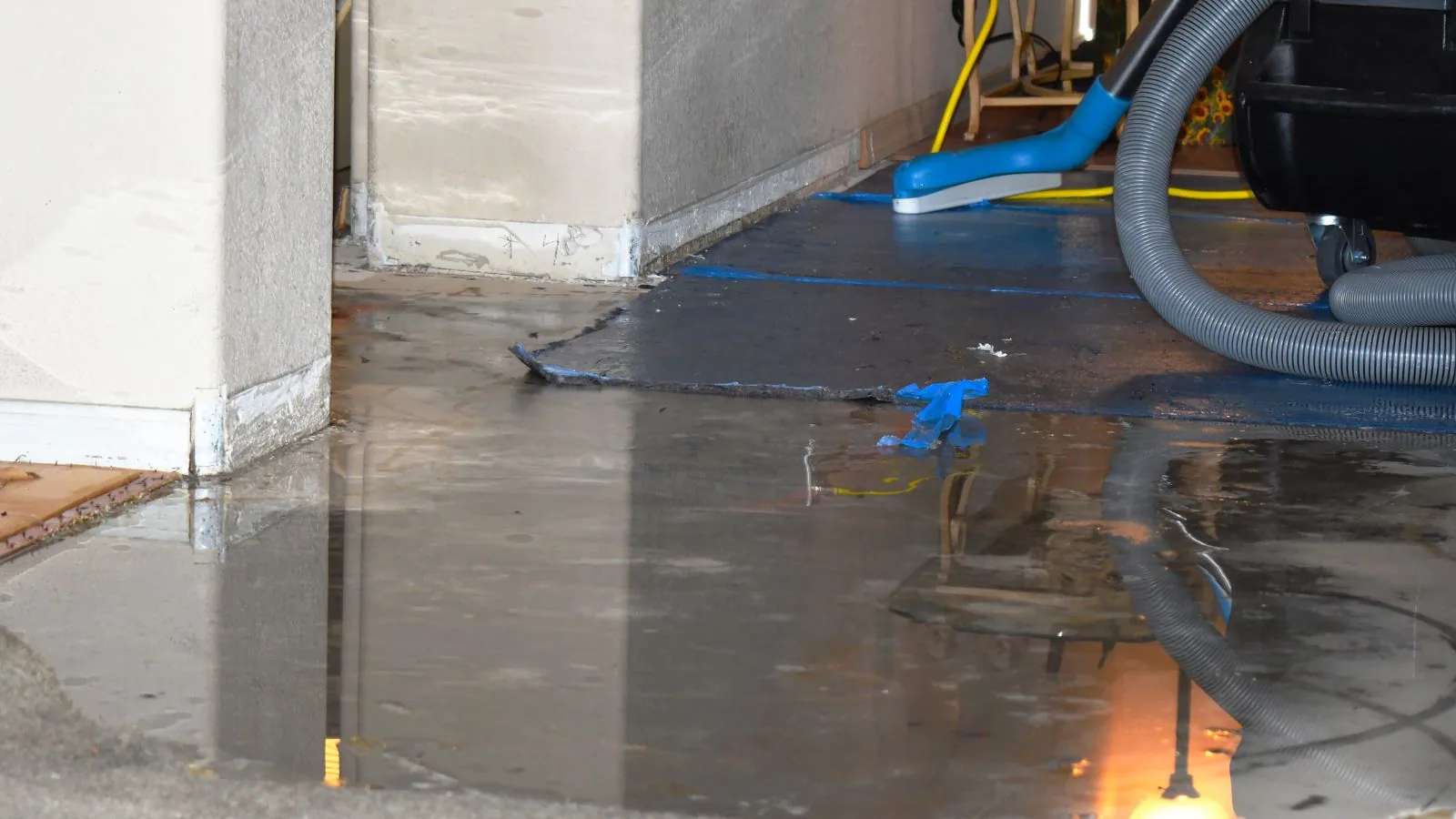
Standing water does damage by the hour
Water that stays on a floor for even a day soaks into subfloor, baseboards and the lower foot of drywall. Call the line any time, since dispatch runs 24/7, and keep the call short so a crew can be sent.
Until the crew arrives, avoid wading through water if lamps, cords or a basement outlet are anywhere near it. Do not run a household vacuum on water, because it is not built for that and can shock you.
What water extraction actually removes
Extraction is the removal of liquid water before any drying equipment goes in. It is quicker and cheaper to pump water out than to evaporate it, so we do this step first on almost every wet job.
A wet vacuum clears a few gallons from a hard floor. A submersible pump handles a flooded basement, and a truck-mounted or portable extractor pulls water out of carpet and pad.
Equipment guideWhich extraction tool fits which situation
Crews pick equipment by depth, surface and access. This table shows the common matches.
| Situation | Tool we use | Why it fits |
|---|---|---|
| More than an inch across a basement floor | Submersible pump and hose | Moves large volume fast and drains outside. |
| Wet carpet and pad | Weighted extractor wand | Pulls water out of fibers and padding. |
| Hard floor with a thin film | Wet vacuum and squeegee | Clears water from seams and corners. |
| Water trapped under flooring | Injection mat or drilled drain points | Reaches water that surface tools miss. |
Extraction day, step by step
Stop the source
We confirm the supply is shut off or the leak is controlled, because pumping a floor that keeps filling wastes time.
Remove standing water
Pumps run first, then vacuums and extractors work the rest of the floor.
Check hidden water
Moisture meters find water in walls and under flooring that is not visible.
Hand off to drying
Air movers and dehumidifiers go in, as covered on our structural drying page.
Need water out of the house?
Call the dispatch line and give your street and the depth of the water. The crew plans pumps and hoses before arriving.
What changes the price of extraction
Extraction is billed on the job, not on a flat figure. These are the main drivers.
Volume of water
More depth and square footage means longer pump time and more hose runs.
Contamination
Gray or black water adds protective gear and disposal steps.
Surface type
Carpet and pad take more labor than a sealed concrete floor.
Access
A basement with a narrow stair needs longer hose runs and more handling.
Time of the call
Overnight and holiday calls change crew scheduling.
We explain scope and price before work starts.
Insurance basicsDoes insurance pay for extraction?
If the water came from a sudden break such as a supply line or a failed appliance, many homeowners policies treat extraction as part of the covered loss. Rising surface water is usually excluded and falls under separate flood coverage.
Check your policy language before you decide anything. Photos taken before extraction begins help your claim.
Local conditionsWater removal in Haverford Township homes
Naylors Run and Meadowbrook Run cross the township, and Darby Creek and Cobbs Creek mark parts of its boundary, so homes near these streams can see basement water after a heavy storm. Finished basements in the postwar neighborhoods such as Chatham Park hold carpet and paneling that wick water quickly, which makes fast extraction matter.
Our crews also work through basement water damage cleanup and bigger flood jobs, and we cover Ardmore across the line.
Before you hireQuestions to ask before the pumps start
A good extraction call starts with a few plain questions. Where did the water come from, is it still coming and has anyone touched the electrical panel? The answers decide whether the crew brings a small vacuum or a pump and long hose runs.
Ask the company how it will protect floors you want to keep, where the water will be discharged and how it measures when the job is finished. A written scope before work starts is a reasonable thing to ask for.
Common mistakesWhat not to do with standing water
Do not use a household vacuum, because it is not made for water and can shock you. Do not leave wet rugs on hardwood, since the dye and moisture stain the finish. Do not drain a basement all at once if the ground outside is saturated, because outside pressure can push on the foundation walls.
Lower the water in stages if the crew advises it, and let them decide the pace.
Before the crew arrivesWhat to do before pumps arrive
Extraction follows the S500 standard, which sets plans by water category.
Quick safety steps.
- Stay out of water near outlets.
- Close the water source.
- Lift small items to dry surfaces.
Water extraction questions
Do you handle water extraction emergencies at night or on weekends in Haverford?
Yes. Dispatch is open around the clock, so night, weekend and holiday calls get the same triage as weekday calls.
Can I rent a pump and do it myself?
For a small amount of clean water you can. For deep water, gray water or anything near wiring, a crew with the right gear and moisture meters is safer and finishes the job properly.
How long does extraction take?
A small area can take an hour or two. A flooded basement may take most of a day, depending on volume and how fast the source stops.
Is drying needed after extraction?
Almost always. Extraction removes liquid water, but wood, drywall and subfloor still hold moisture that only drying equipment removes.