
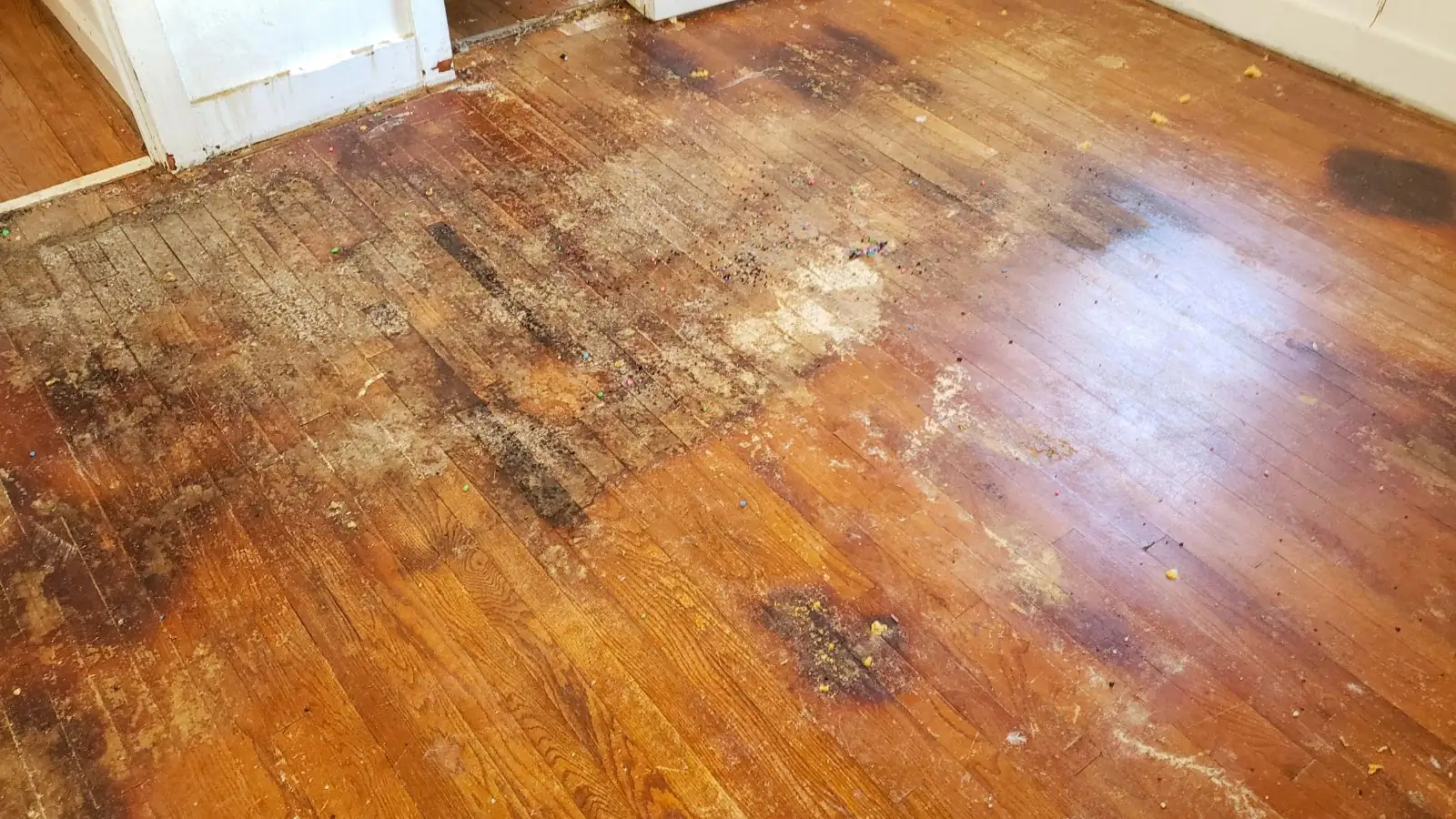
Why wood grows mold
Wood is organic and porous, so it holds moisture and feeds mold when it stays damp. Joists above a wet crawl space, window trim near a leak and stored lumber in a basement are common places.
Without moisture, mold stops growing. Drying is the first step and the one that decides whether the wood can be saved.
Check the wood before you clean
Press a screwdriver into the wood. If it sinks easily or the fibers crumble, the wood has begun to rot and may need replacement, especially if it is structural.
If it feels hard, the growth is likely on the surface and the wood can be cleaned.
Dry first
Run a dehumidifier and fans until the wood is dry. A moisture meter helps, since wood can feel dry on the surface while the core is still wet.
Cleaning damp wood only spreads moisture around. Wait for the readings to drop.
Decision guideWood type and approach
| Wood | Approach | Notes |
|---|---|---|
| Framing and joists | Dry, brush or HEPA vacuum, assess strength | Structural questions go to a professional. |
| Finished trim | Clean with detergent and water, dry | Replace if swollen or soft. |
| Deck boards | Scrub with a stiff brush and rinse | Outdoor mildew often returns. |
| Furniture | Clean outdoors with detergent, dry in the sun | Upholstery may need replacing. |
Mold on framing?
Call. Structural wood needs a moisture check first.
Cleaning surface growth
Wear gloves, eye protection and a mask rated for fine particles. Use a stiff brush with detergent and water, and wipe the wood dry.
A HEPA vacuum helps pick up dust from rough or unfinished wood. Do not dry brush a large area, because that sends spores into the air.
Sanding and sealing
Light sanding can remove surface staining on solid wood, but only after the wood is dry and cleaned. Sanding moldy wood without protection releases particles.
After cleaning, a sealer or primer helps protect from future moisture. Do not seal wood that is still damp.
Fixing the cause
Cracks, leaks, downspouts that empty near the foundation and missing vapor barriers all feed moisture. If you do not fix them, the growth returns.
Ask a contractor to check gutters, grading and flashing, and ask a plumber to check lines near the wet area.
Outdoor wood, decks and fences
Outdoor wood grows mildew easily because it stays damp and shaded. Scrub with a stiff brush and a deck cleaner, rinse and let it dry in the sun. Trim plants that block airflow.
A water-repellent sealer after cleaning reduces regrowth. Reapply it on the schedule the product suggests.
Stored lumber and firewood
Wood stored in a damp basement or garage grows mold on its surface. Move it off the floor, give it air on all sides and keep it away from walls. Use a dehumidifier if the space stays damp.
Moldy firewood is best stored outdoors under cover, away from the house, and handled with gloves.
Antiques and heirloom furniture
Old wood furniture can be cleaned gently with a damp cloth and mild detergent, then dried slowly out of direct sun. Aggressive scrubbing can remove finishes and stain the wood.
For valuable pieces, ask a conservator or furniture restorer before you start.
Protective gear and cleanup
Wear gloves, safety glasses and a mask rated for fine particles when brushing or sanding. Bag debris and cleaning rags before carrying them through the house.
Wash your clothes right away and clean tools with detergent and water.
Wood in kitchens and under sinks
Cabinet bases and subfloors under sinks pick up slow leaks. Empty the cabinet, check the back and the floor with a flashlight, and press the wood with a screwdriver.
If the wood is soft, a carpenter or restoration crew can replace the section.
Wood and humidity in a basement
A basement that stays above about 60 percent humidity grows mold on wood easily. A dehumidifier with a drain hose and a hygrometer are cheap tools that help.
Keep stored wood off the floor and away from the walls.
SourcesWhere this guidance comes from
Cleaning and discarding advice follows EPA guidelines on mold in the home, and professional work follows the S520 mold remediation standard as an industry reference.
More detailWhen wood is too far gone
Soft, crumbling or deeply stained wood may have lost strength and should be replaced instead of cleaned. Press a screwdriver into it. If it sinks in easily, the damage goes past the surface.
Structural wood, such as joists or a subfloor, deserves a closer look. If you are unsure, have someone check before you sand or paint.
More detailKeeping it from coming back
Find and fix the moisture source first. Mold returns wherever wood stays damp, so a leak, a missing vent or a damp crawl space has to be corrected.
After cleaning, let the wood dry fully before sealing or painting. See mold remediation if the growth is widespread.
More detailCleaning wood without damaging it
Wear gloves, eye protection and a respirator rated for the job. Dry brush loose growth outdoors if you can, then clean with a mild detergent and water and let the wood dry fully.
Avoid soaking the wood, since added water can feed the problem. Dispose of rags and brushes in a sealed bag. If the wood is part of the house structure, ask a crew to look before you start.
Basements and crawl spaces in Haverford Township
Many Haverford Township houses date from the railroad suburb era of Llanerch, begun in 1897, and Brookline, begun in 1909. Older basements often have exposed wood joists and masonry walls that let moisture through.
The EPA advises drying wet materials within 24 to 48 hours and notes that moldy materials that cannot be cleaned should be discarded. Porous or rotten structural wood should be assessed by a professional before work continues.
When wood has to go
Replace wood that is soft, crumbling or deeply stained all the way through. Structural members should be looked at by someone qualified, and sistering or replacement is a carpenter's decision.
Our crews can dry and clean the area, and we explain scope and price before work starts. See crawl space water damage and mold remediation. We serve Ardmore and Wynnewood.
Common questionsMold on wood questions
Are the joists in an older Haverford Township basement safe to clean?
If they are firm and dry, they can usually be cleaned. Soft or damaged framing needs a professional to assess it first.
Can I use vinegar or bleach on wood?
Detergent and drying work better. Bleach does not penetrate wood and adds moisture.
Will sanding remove the mold?
It removes surface staining on dry solid wood, but wear protection and clean up the dust.