
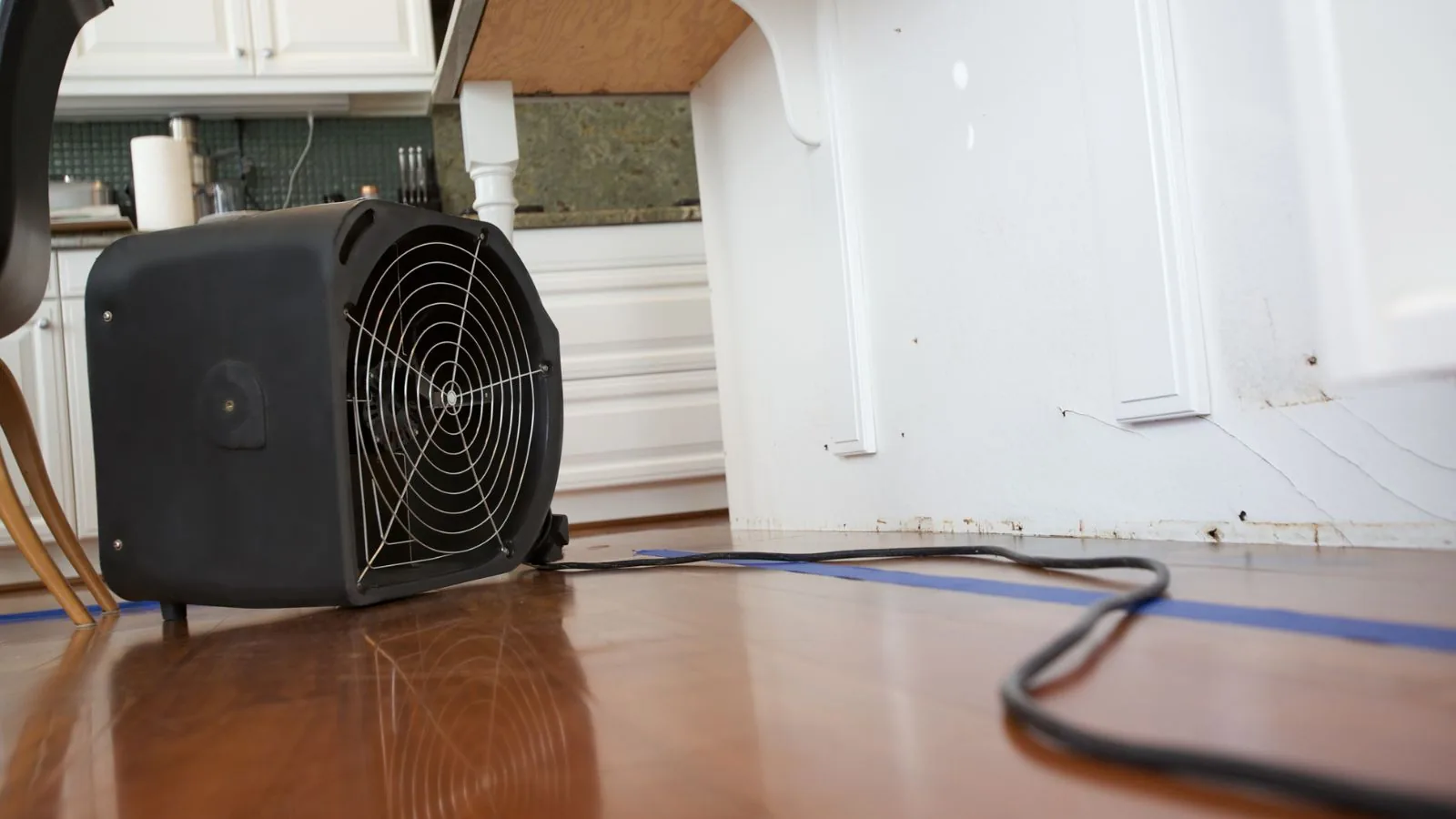
The short answer for most homeowners
A standard homeowners policy usually covers water damage that is sudden and accidental, such as a pipe that bursts or an appliance hose that fails. It usually does not cover flood from rising surface water, and it often excludes damage from slow leaks, poor maintenance or wear.
Those are general patterns, not promises. Every policy has its own wording, limits and deductible, and the only way to know what yours does is to read it or ask your agent.
What counts as sudden and accidental
Insurers separate a sudden event from a gradual one. A supply line that splits on a Tuesday night is sudden. A drip under a sink that rotted a cabinet over six months is gradual, and many policies treat it as a maintenance issue.
The same logic applies to roof leaks. Storm damage to a roof that lets rain in is often covered, while a roof that leaks because it is worn out may not be.
Typical treatmentCommon water losses and how policies usually treat them
The table shows general patterns. Your policy may differ.
| Type of loss | Often covered? | What to check |
|---|---|---|
| Burst or frozen pipe | Often yes | Heat on, reasonable care, deductible. |
| Appliance hose failure | Often yes | Sudden versus gradual wording. |
| Rising surface or creek water | Usually no | Separate flood policy. |
| Sewer or drain backup | Only with an endorsement | Limit and sublimit amounts. |
| Long-term seepage or humidity | Usually no | Maintenance exclusion. |
Flood is a separate policy
Standard homeowners coverage does not pay for flood. Flood insurance is a separate policy, often through the National Flood Insurance Program, and a new NFIP policy generally takes 30 days to take effect.
That waiting period is why the time to buy is before a storm is forecast. If you live near a creek or in a low spot, ask your agent about a flood quote.
Water damage happening now?
Call the 24/7 line. Documenting the loss starts on the first visit.
Sewer and drain backup
Many policies leave out sewer or drain backup unless you add an endorsement. The endorsement may carry a low limit, so read the dollar amount.
If a basement floor drain pushes up dirty water, the cause matters. A backup from your own drain line and a backup from the municipal main may be treated differently by the insurer.
Questions to ask your agent
Reading a policy is easier with a short list. Ask the agent plain questions and write down the answers.
What is my deductible for water damage? Do I have sewer backup coverage? Is there a separate wind or storm deductible? How does the policy treat mold after a covered loss?
- Is there a limit on mold or fungi coverage?
- Does my policy pay for tearing out walls to find a leak?
- How does the policy handle matching floors or cabinets?
Deductibles and what they mean for small losses
Your deductible is the amount you pay before the policy pays. A small leak that costs less than the deductible is usually not worth a claim, though you should still keep records in case the damage turns out larger.
Some policies have a separate, higher deductible for wind or storm events. Look for it in the declarations page, not only in the main form.
Mold after a covered water loss
Mold coverage varies a great deal. Some policies pay for mold that follows a covered water event, often up to a stated limit, while others exclude fungi entirely or cap it at a low amount.
That is another reason to dry a house quickly. The EPA advises drying wet materials within 24 to 48 hours, and a fast response reduces the chance that mold becomes a separate claim.
Wear, maintenance and neglect exclusions
Policies exclude damage that results from wear and tear, rust, rot or lack of maintenance. An old water heater that rusts through may be treated as wear even though the water damage it caused is covered.
The practical lesson is to keep up with obvious maintenance. Replace old hoses, flush heaters and keep gutters clear, because a documented history of care makes a claim easier to support.
Reading the endorsements
Endorsements add or remove coverage and are easy to miss. Look for sewer or drain backup, water backup and sump pump overflow wording, since each covers a different cause.
If you find none of these and have a basement, ask your agent what it would cost to add them and what the limit would be.
Contents versus the building
Policies split coverage between the structure, such as walls, floors and built-ins, and personal property, such as furniture and clothing. Water damage can hit both, and each part has its own limit and sometimes its own valuation method.
Ask whether contents are paid at actual cash value or replacement cost. The difference can change what you receive for a soaked sofa or mattress.
Why timing and notice matter
Policies ask you to give prompt notice of a loss and to protect the property from further damage. Waiting weeks to report a burst pipe can give the insurer an argument that part of the damage could have been avoided.
A short call to your agent is better than silence, even if you are still deciding whether to file.
What Haverford Township homeowners should know
Delaware County was included in the federal disaster declaration for the remnants of Hurricane Ida in 2021, which covered the storm period from August 31 to September 5. Cobbs Creek and Darby Creek form parts of the township boundary, and Naylors Run and Meadowbrook Run run through it.
The Pennsylvania Insurance Department takes consumer questions at 877-881-6388. The township's two sewer service areas, Cobbs Creek and Darby Creek, are worth knowing about if you are asking an insurer about drain backup.
What to do before you call the insurer
Stop the water, make the area safe and take photos. Keep damaged material until the adjuster says otherwise. Dry-out work should start quickly because an insurer expects you to prevent further damage.
Call a restoration company early. Our water extraction and flood damage crews log moisture readings and keep photos that you can give your adjuster. We also serve Ardmore and Wynnewood.
Common questionsInsurance questions
Does homeowners insurance cover creek flooding in Haverford Township?
Usually not. Rising surface water from Cobbs Creek, Darby Creek or a stream is generally excluded from standard policies and needs separate flood coverage.
Will my insurer pay for mold after water damage?
It depends on your policy. Some pay for mold that follows a covered loss, often with a limit, and others exclude it.
Should I wait for the adjuster before cleaning up?
No. Take photos, then start mitigation. Waiting lets damage spread and may count against you.